Scanner (iTero, Trios)
No trays. No paste. Just a clear digital scan.
If you’ve ever had dental impressions taken with putty and trays, you probably remember the feeling—bulky, uncomfortable, and sometimes hard to sit through.
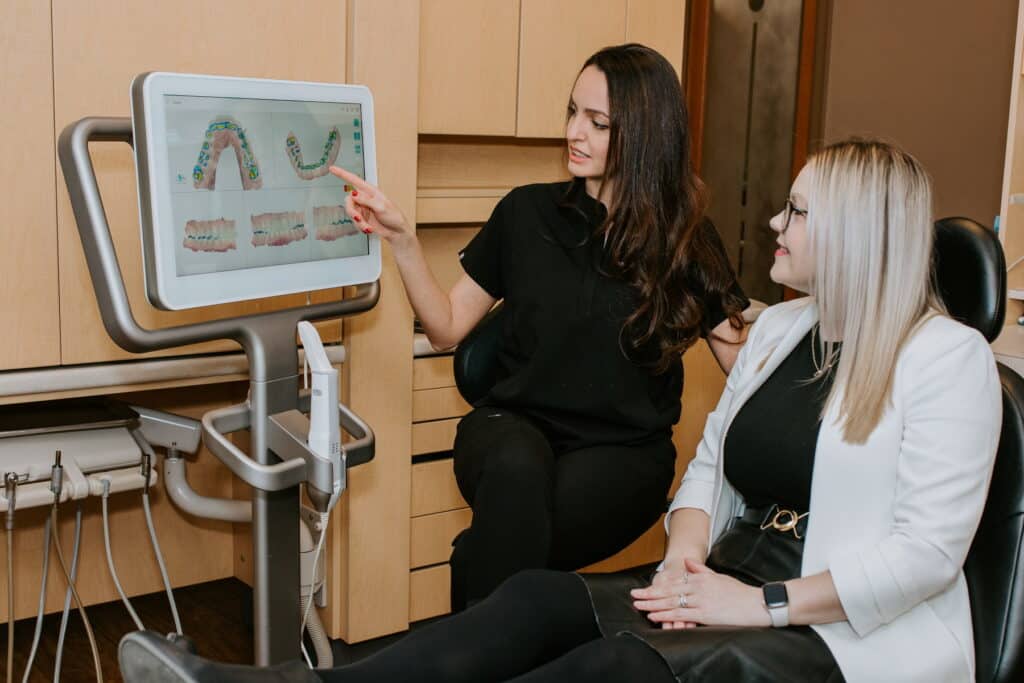
That’s not the case anymore. With iTero and Trios scanners, your dentist simply moves a small device around your mouth to capture a complete image. No mess. No holding your breath. Just a quick scan and a full 3D model on screen before you even stand up.
A simpler way to get the detail your dentist needs.
Digital scanners like iTero and Trios are used to create a precise, 3D map of your teeth, gums, and bite. Instead of molding material, your provider captures everything with a light-based scan — no radiation involved.
These scans aren’t just easier for you. They also give your dentist more to work with—which means better planning, better outcomes, and fewer surprises along the way.
You might get a scan if:
• You’re starting Invisalign or clear aligners
• You need a crown, bridge, or custom veneer
• You’re being fitted for a night guard or sports mouthguard
• Your dentist wants to monitor bite or gum changes over time
• You’ve had trouble with physical impressions in the past
It’s a small change in the process, but one that makes everything that follows feel easier.
No pressure. No gagging. Just a smooth, quiet scan.
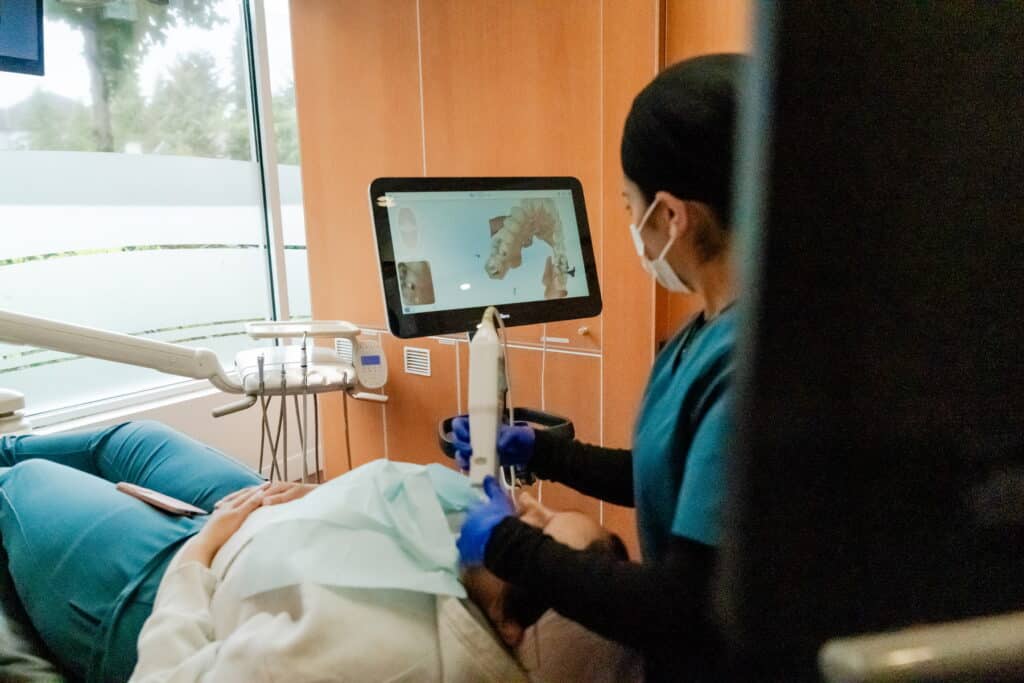
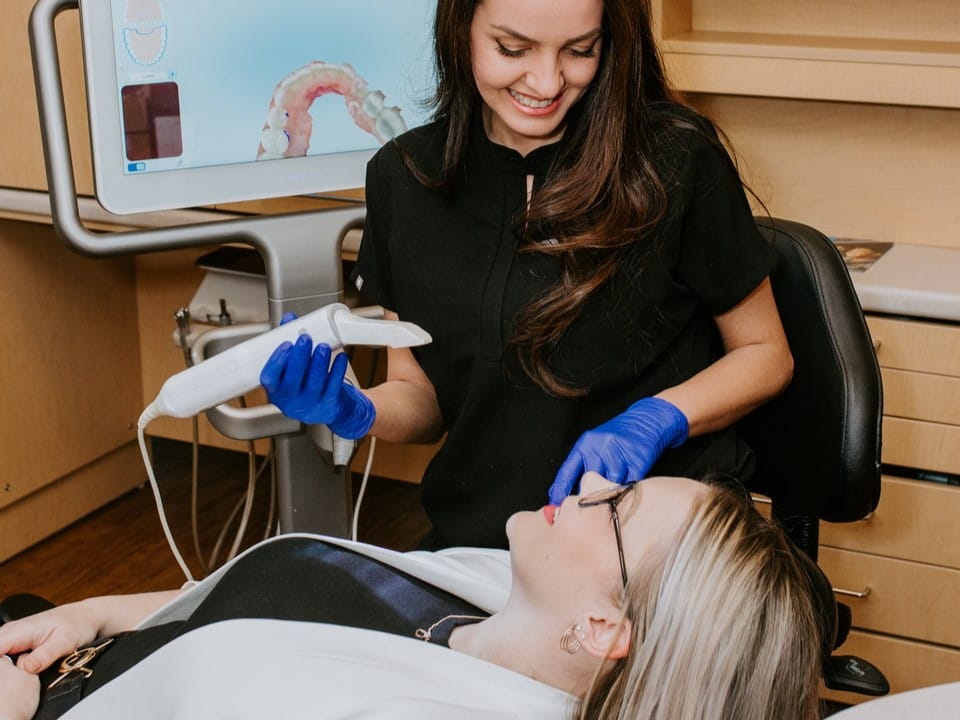
There’s no prep needed. You’ll sit back while your provider slowly moves the scanner over your teeth. As they go, a digital model builds on the screen—almost like watching a 3D map take shape in real time.
Here’s how it usually goes:
• The wand-shaped scanner is guided gently around your upper and lower teeth
• The image builds live on screen as each area is captured
• If anything needs a second pass, your provider will rescan that spot right away
• Once complete, the scan is reviewed and sent directly to the lab or used for planning
The whole process typically takes just a few minutes—and most people are surprised by how relaxed it feels.

Your dental questions, answered.
Better imaging. Less hassle. And a clearer path forward.
From simple restorations to full orthodontic planning, digital scanning helps make your visit more comfortable—and your treatment more precise.No mess. No discomfort. Just a clearer way to get started.