CBCT Scanner
When your dentist can see more, they can do more.
Some things don’t show up on a regular x-ray. A nerve running close to a wisdom tooth. A hidden infection. A narrow ridge of bone where an implant might go.
That’s where CBCT scans come in. With one quick, comfortable scan, your provider gets a detailed 3D view—so nothing important gets missed, and your treatment can be planned with precision.
Better images mean better decisions—plain and simple.
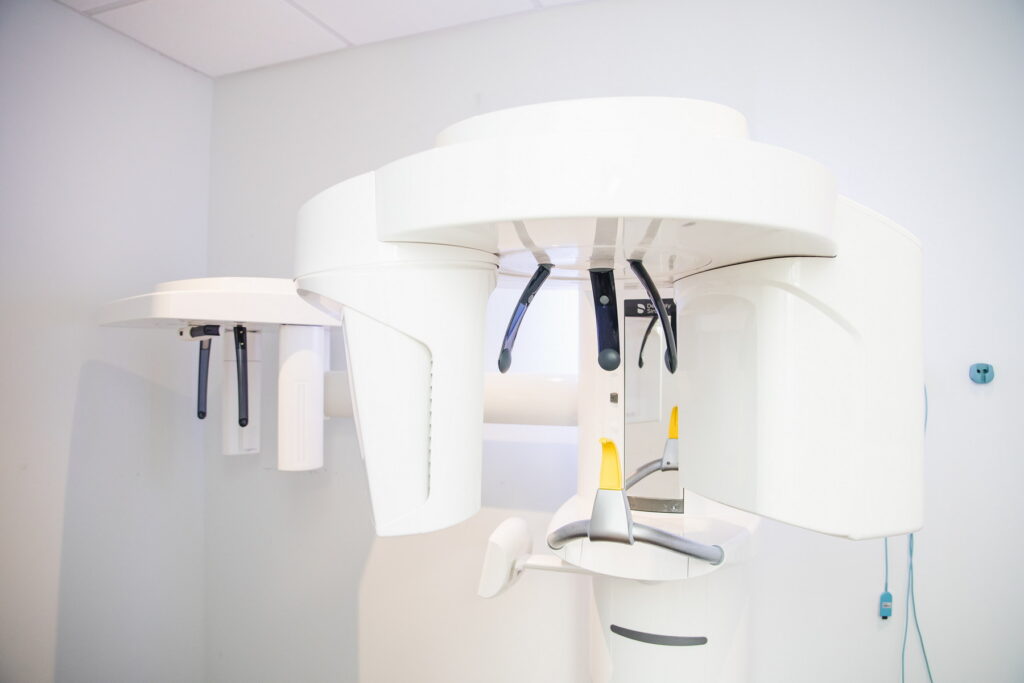
CBCT stands for cone beam computed tomography. Unlike a traditional x-ray, it captures a 3D snapshot of your mouth, jaw, and surrounding structures—all in a matter of seconds.
It’s not something you’ll need every visit. But for certain cases, that extra level of detail can make all the difference.
Your provider may recommend a CBCT scan if:
• You’re preparing for dental implants or oral surgery
• There’s a concern below the surface—like an infection or fracture
• You’re being assessed for orthodontics or airway issues
• TMJ, sinus, or nerve involvement needs investigation
• Precision is needed to avoid complications during treatment
It’s quick. It’s safe. And it helps your provider treat the whole picture—not just what’s visible.
No long wait times. No discomfort. Just answers.
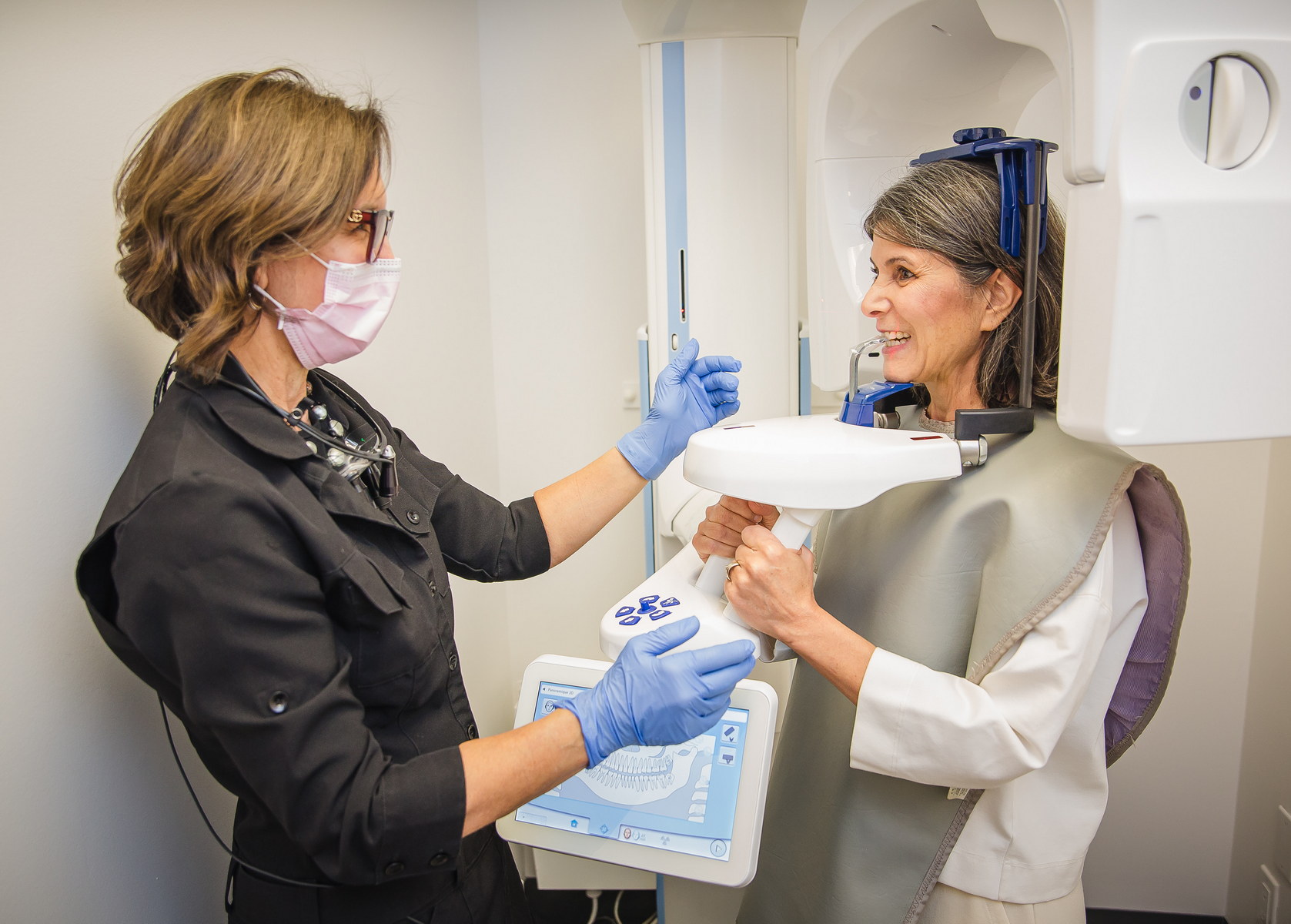
CBCT scans don’t require any special prep. You’ll be guided into position—either seated or standing—and asked to stay still for a short rotation. The scan itself only takes seconds.
Here’s what the process usually involves:
• A quick review of why the scan is needed
• Removal of jewelry, glasses, or anything that could interfere
• Positioning your head comfortably in the scanner
• A full rotation to capture 3D images
• No discomfort, and no enclosed space—it’s open and spacious
• Immediate image availability for review and planning
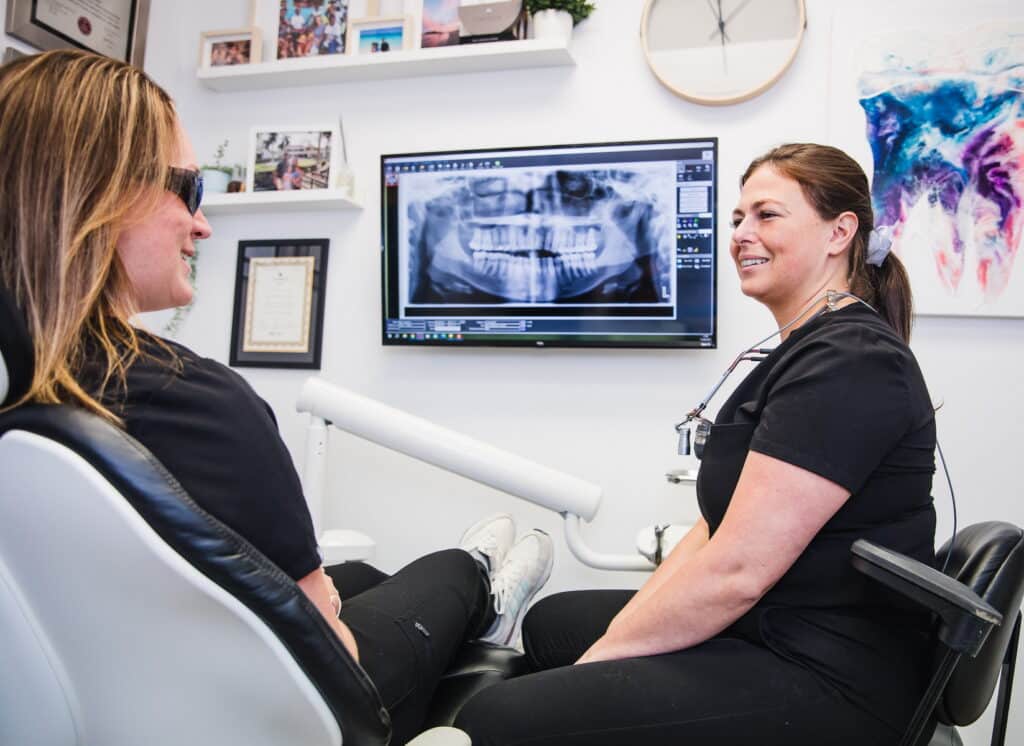
You’ll be able to see the scan right there with your provider—and understand exactly what’s going on and why it matters.

Your dental questions, answered.
When your care calls for accuracy, this is how we deliver it.
A CBCT scan gives your dentist the detail they need—to plan carefully, treat safely, and avoid surprises.
It’s not about more tests. It’s about smarter care, with fewer unknowns.