X-Rays (Digital)
Digital X-rays give us the full picture.
You can’t always see what’s happening inside a tooth—and sometimes, there’s no pain to warn you. Things like decay, infection, or bone loss can develop quietly. A quick scan helps catch them early.
Digital X-rays are fast and straightforward. They use much less radiation than traditional methods and produce detailed images on the spot. It’s a simple tool that plays a big part in keeping your mouth healthy.
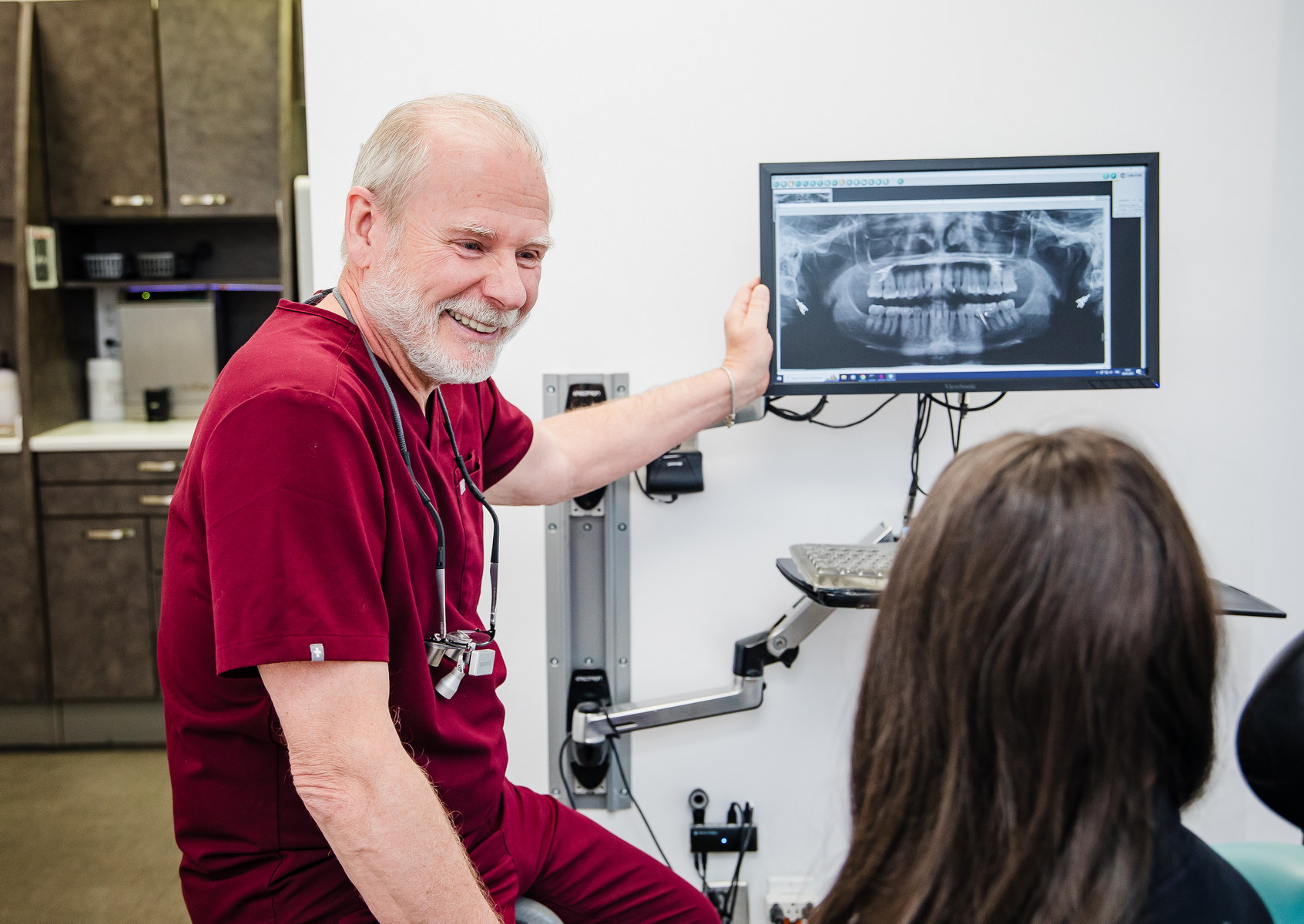

Some things don’t show up until we look closer.
A lot happens below the surface. Between teeth. Under fillings. Deep near the roots. Digital X-rays help your provider see what’s hidden—so you can take care of it before it becomes something more serious.
Instead of film, a small sensor is used. The scan is done in seconds, and the results appear on a screen right away. From there, your dentist can zoom in, explain what they see, and walk you through any next steps.
You might need an X-ray if:
• It’s your first visit to a clinic
• You’re in pain or something feels off
• You’ve had an injury to your mouth or jaw
• You’re preparing for treatment, like a filling or extraction
Every situation is different. But when X-rays help your provider give better care, they’ll let you know—and explain why it’s the right move.
It’s over before you know it.
There’s no special prep. No recovery time. The sensor goes in, you hold still for a few seconds, and that’s it.
Here’s how it typically works:
• You’ll be told if an X-ray is needed and why
• A small sensor is placed in your mouth
• The scanner captures the image from outside
• The result pops up on a screen right away
• Your provider reviews it, and talks through what it shows
It’s all part of the visit. Quick, painless, and built into your care.


Your digital X-ray questions, answered.
When something’s wrong, a clear view helps.
You don’t need to be in pain to benefit from a scan. A digital X-ray gives your dentist insight—and gives you peace of mind.