Snoring / Sleep Apnea Devices
Dental devices can help you breathe easier—and sleep deeper.
Some nights you sleep. Other nights, it’s just hours of tossing, snoring, or waking up without knowing why. You feel it in the morning—groggy, foggy, heavy-eyed. And it lingers all day.
Snoring and sleep apnea don’t just affect sleep. They strain your body. They mess with your memory, your mood, even your heart.
For a lot of people, the fix is surprisingly simple. A custom dental device can open your airway while you sleep—quietly, gently—so your body doesn’t have to fight to rest. And within a few nights, many patients feel the difference.
It’s not bulky. It’s not loud. And it just might change your mornings.
These devices are small—easy to wear, easy to carry—and shaped to fit your mouth. Some work by moving your jaw slightly forward. Others hold your tongue in place so it doesn’t slide back and block the airway.
They’re often used for mild to moderate sleep apnea, or when a CPAP machine isn’t the right fit. If a mask or machine has ever felt like too much, this might be a way through.
The first step isn’t a device. It’s a conversation.
Your dentist will ask questions about your sleep. Do you snore? Do you wake up feeling unrefreshed? Has anyone told you that you stop breathing at night?
If it sounds like sleep apnea might be involved, they might recommend a sleep study first. If you’re a good candidate for a dental appliance, here’s what usually happens next:
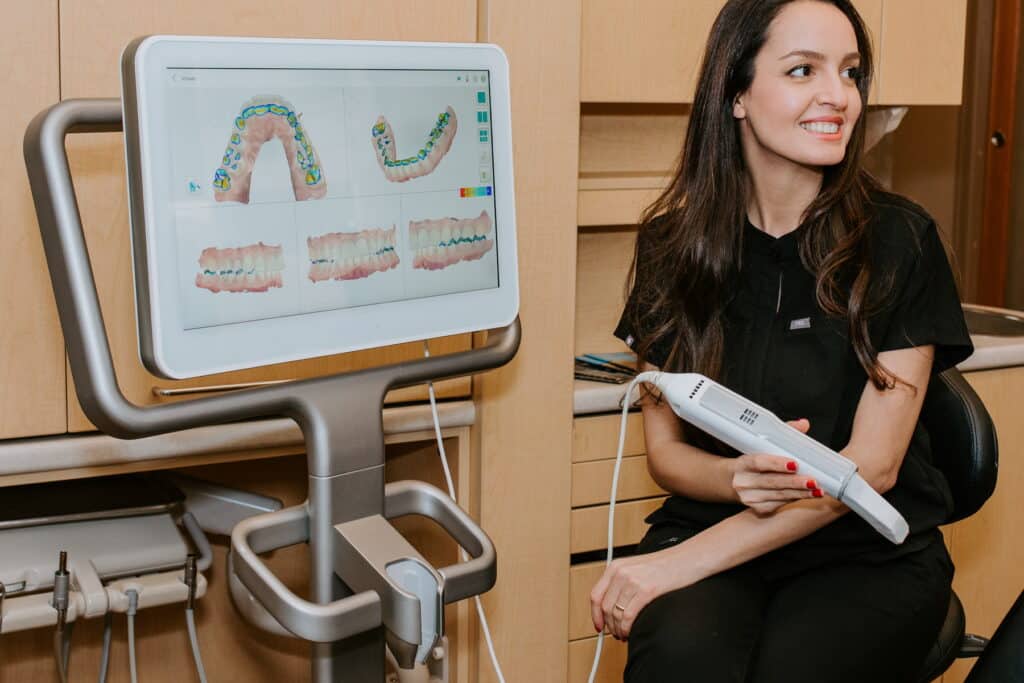
• A scan or impression is taken to get the exact shape of your bite
• A custom device is made for your mouth
• You’ll come back to try it on and get it adjusted
• Follow-ups help make sure it’s working and feeling right
No pressure. No assumptions. Just a quiet plan built around better sleep.

Your dental questions, answered.
Breathe easier, sleep better with a dental device.
If snoring or apnea is leaving you exhausted—or keeping someone else up—a small dental device might help you rest the way your body’s meant to.