Dental Bridges
Dental bridges help bring things back to normal—one tooth at a time.
When you’re missing a tooth, you feel it every day—when you eat, when you speak, when you catch your smile in the mirror. It’s not just a cosmetic thing. It’s personal. A dental bridge can fill that space and help you feel like yourself again, with something that looks and feels right at home in your mouth.

What is a dental bridge, really?
Think of it like a connector. A dental bridge uses a natural-looking artificial tooth to fill the space left behind, anchoring it to the teeth next to it or to implants. It’s carefully shaped and coloured to match the rest of your smile. After a little while, it blends in so well you might even forget it’s there.
People choose bridges for all sorts of reasons—they don’t want surgery, they want something permanent, or they’re just ready to eat, speak, and laugh without hesitation.
Bridges can:
• Make chewing and talking feel natural again
• Stop nearby teeth from drifting out of place
• Bring back balance to your bite
• Support your jaw alignment
• Help you feel more like yourself day to day
The real win? Comfort. And maybe a little peace of mind.
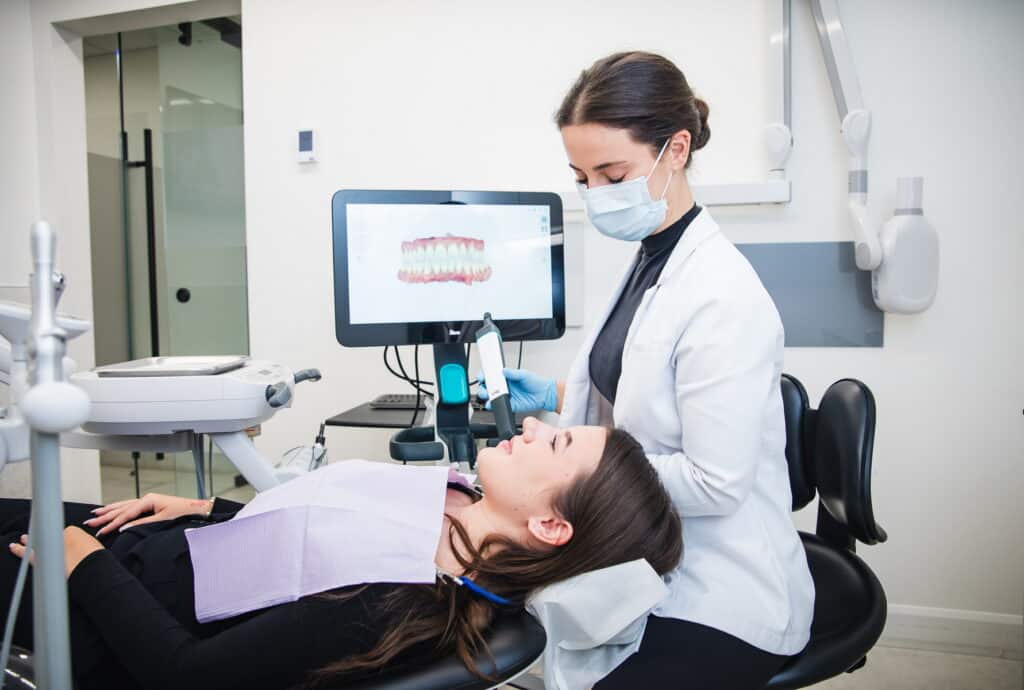

Getting a bridge: what it involves.
First, your dentist will check the area, ask you some questions, and talk through the options. If you go ahead with a bridge, they’ll take impressions of your mouth and prep the teeth that will support it. You might get a temporary one while your custom bridge is made.
Once the final version is ready, it’s adjusted, polished, and cemented in place. That’s it—no long recovery, no big ordeal.
Types of bridges your dentist might recommend:
• Traditional: held by crowns on both sides
• Cantilever: attached on just one side
• Maryland: bonded to the back of neighbouring teeth
• Implant-supported: ideal when multiple teeth are missing
• Temporary composite: often a short-term option
Every mouth is different—your dentist will walk you through what makes the most sense for yours.

Your dental questions, answered.
Want to close the gap with something that feels natural?
There’s no rule saying you have to fix that missing tooth. But if it’s been bothering you—even just a little—there’s something reassuring about closing the gap. A bridge can be a simple, sturdy way to do it.